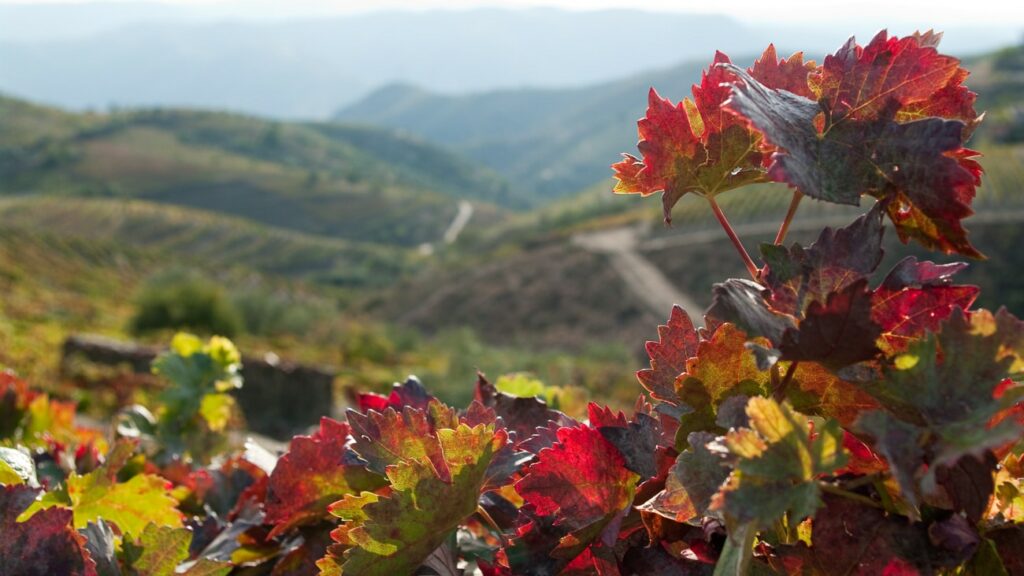
As small as Portugal might be, this country is full of amazing Wine related activities, regions, regional gastronomy, and landscapes.
Not only Portugal offers a huge variety of wines (white, rosé, red, and “Vinho Verde”), but the country is also a leader in providing unique liqueurs that no other country has. The highlight for:
- Moscatel
- Port Wine
- Madeira Wine.
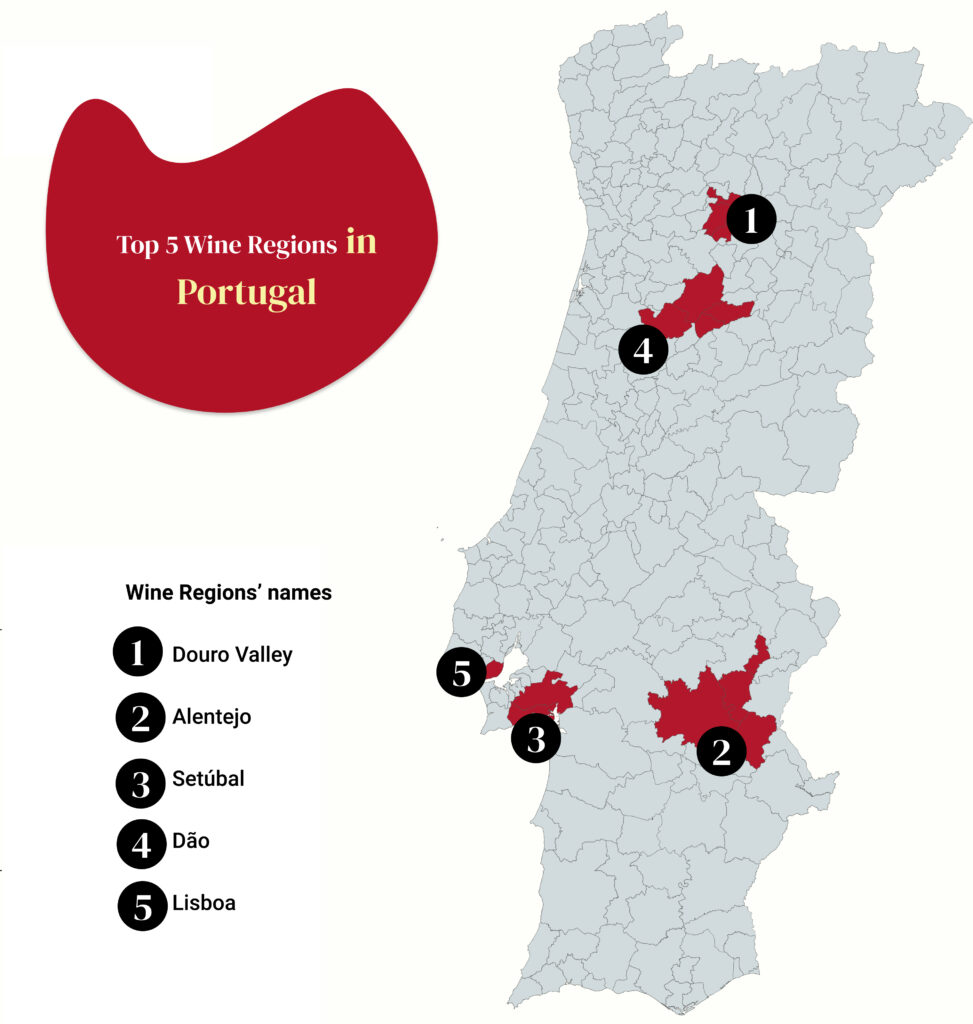
There are so many unique varieties that you may try during a wine trip to Portugal that it is hard to describe them all here. In this Top 5 best Wine Regions of Portugal, we will shortly review the 5 best wine regions that this beautiful country has to offer.
In a nutshell, as the fourth biggest European wine producer, Portugal has around 14 wine regions and 31 DOCs (Denomination of Controlled Origin). To provide a specific idea, in 2020, Portugal has produced around 7 000 000 hl of wine.
1 |
Top Portugal Wine Region: Douro Valley
About Douro Valley
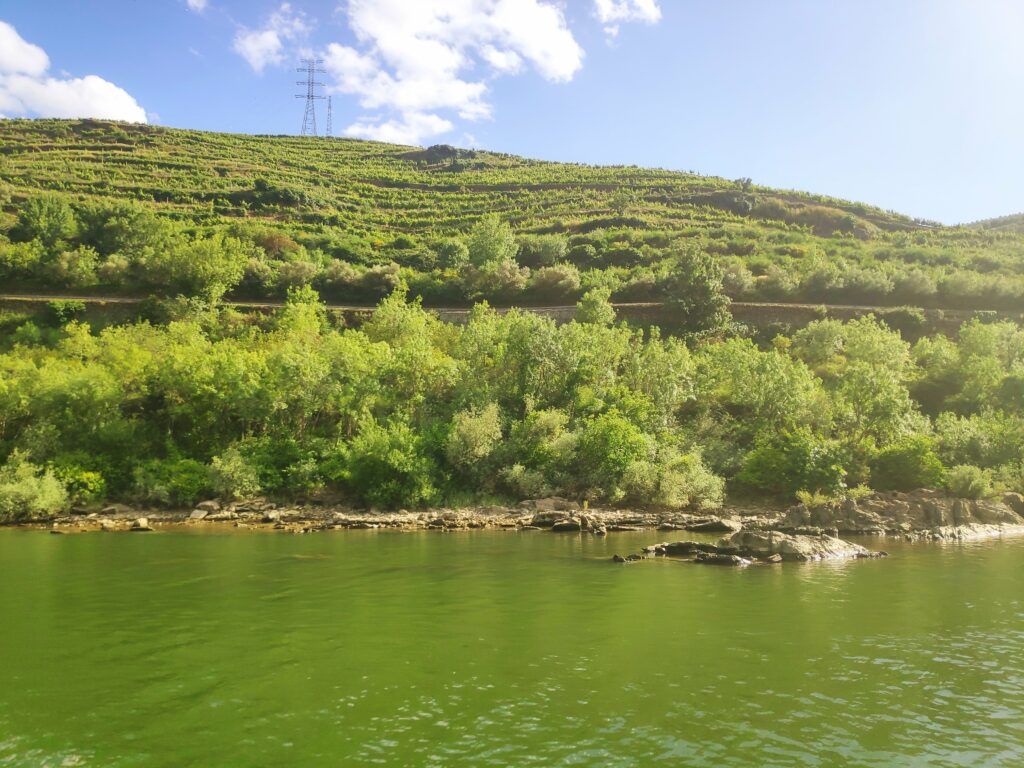
The Douro Valley wine region is one of the oldest demarcated wine regions in the world. This small region is located at about 1h travel from Porto, The Douro Valley is one of the most magical places on earth. Its beauty, magical vineyards surroundings, green landscapes (or famed-colored in autumn) reflected on the Douro River, are some of the rarest and marvelous phenomenons in the world. That is why the Douro has been one of the favorite wine tourism destinations for both national and international tourists.
It is in the hills of the Douro Valley, that these popular wines are produced. Thus, presenting amazing surroundings, and diverse wines’ flavors. The Douro includes 14 main viewpoints, where we can highlight Peso-da-Régua, Foz Coa, and Pinhão as the most common. There are different ways to travel through the Douro region: Boat, Train, helicopter, or by road, every option will certainly provide an unforgettable wine tourism experience.
Douro Valley wineries and most popular wines
The Douro has majorly small wine producers but counts with a lot of them. There are actually 200 wineries in the Douro. The common name used for wine producers in Portugal is “Quintas”, which means Farms, in English. Some of the major Douro producers are Quinta do Crasto, Quinta da Pacheca, Quinta da Roêda, Quinta das Carvalhas. But there are much more than just the biggest producers, other fast-growing winemakers, that are also proposing differentiating wine tourism experiences are, for example, Quinta da Valdalágea.
Douro Valley has a large number of wine producers, either they are big or small winemakers. Therefore, families hand the secrets of wine production from generation to generation. This makes the grapes and wines unique and considered as family’s “secret”.
The region is known for its Port Wine, a sweet and fortified wine that is usually served in the dessert. This wine comes from the northern regions of Portugal, and from the Douro Valley wine region. Port wine can be red, white, rosé, and an aged style. Port wine can be found in usual supermarkets, but there is nothing better than to taste the unique Port wines that traditional wine producers from Douro Valley offer.
Fun fact about the region
We could talk about more than 10 fun facts about this region. However, the most impressive one is that its wine-growing area is designated by UNESCO as World Heritage. Additionally, Port and wines that have DOC from the Douro are produced with only native grape varieties.
2 |
Alentejo
About Alentejo
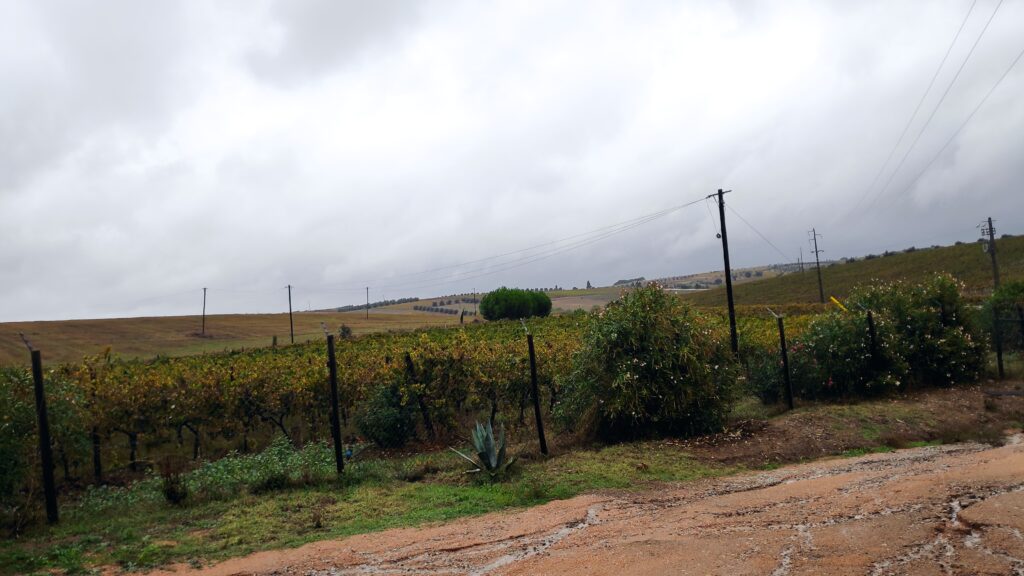
Alentejo is one of the biggest regions in Portugal. It actually occupies 1/3 of the country, can you imagine that? The Alentejo’s lands are used to intensively produce cereal crops, cork, and wine. Alentejo is best known for its Red Wine, which combines really well with traditional, regional food that is mainly heavy-dishes based on meat, bread, and other typical elements of gastronomy.
Alentejo’s best wines are sold under Alentejo DOC (Denomination from controlled Origem). The main grape varieties that we can find on Alentejo’s wines are Touriga Nacional, Aragonez, Trincadeira for the red wine, and Antao Vaz for the white wine. Antao Vaz is often mixed with other varieties since it gives an extra fruited taste to the wine. So, it is mixed with others to balance the tastes, and do not make it too sweet or too dry. Although the wine region is famous for its red wines, it is not queen to mix it with other popular international wine varieties such as Syrah or Cabernet Sauvignon. Alentejo’s wine region becomes unique due to the fact that it produces its own Alentejo’s wine, which is hard to find in another region worldwide.
Alentejo’s wineries and most popular wines
Demarcated in 1988, Alentejo is truly traditional and warm. Most important of all, the region has one of the most unique and amazing gastronomy and wines found in Portugal. Alentejo’s is divided into 8 regions: Reguengos, Borba, Redondo, Vidigueira, Évora, Granja-Amareleja, Portalegre and Moura. And, all of them have unique wines, from different wineries (often called “Herdade” meaning homestead in English, and “Quinta” which means farm)
Alentejo’s is most known for its red wines that are usually full-bodied, with a wild berries aroma. Even though, the wine region still has a lot of offer when it comes to white wines, which are usually acid, medium-bodied, and with an aroma of tropical fruit. The most important white grape varieties in the region are the Roupeiro, Antão Vaz, and Arinto. Regarding the red varieties, stresses the importance of Trincadeira, Aragonez, Castelão, and Alicante Bouschet (French variety).
It’s main wineries (“Quintas” and “Hedades”) are Quinta Cartuxa, Adega Mayor, Herdade da Malhadinha, Herdade do Esporão. However, among the 263 wineries of this region, we also find some smaller producers that have still unique offers, for example, Courelas da Torre (organic winemakers), or Ervideira (a winemaker that creates unique and broad wines that aim to be appreciated by everyone).
Alentejo’s fun fact
Alentejo’s is one of the world’s sunniest regions, and, Europe’s most sunny country: it has 3,000 hours of sunshine annually which is the equivalent to San Diego. In the sunny region, lives their cork plantation (= to one-third of worldwide’s cork ecosystem), providing a healthy ecosystem to its species.
3 |
Setúbal
About Setúbal
Setúbal is part of one of Portugal’s most popular penínsulas, called Península de Setúbal. Divided into two wine regions, there are two DOC denominations in Setúbal: Setúba and Palmela. The region is becoming the top tourism destination in the country due to its beautiful places to visit:
- National Parks of Arrábida
- Natural Reserve of Sado Estuary
- Protected Landscape of Arriba Fóssil
- Beautiful beaches from Arrabida, where the mountains meets the ocean
- Huge Costa da Caparica coast
- Heritage buildings & historical importance.
Setúbal wine’s market has started a long time ago, only with exportation methods. This region, with around 9.210 vineyards hectares, has always boosted the wine market in Portugal by being one of the top exporters of wines of all kinds. Nowadays, the region has become much more proactive, it is recognized as a strategic player and has wines of amazing quality.
Setúbal‘s wineries and most popular wines
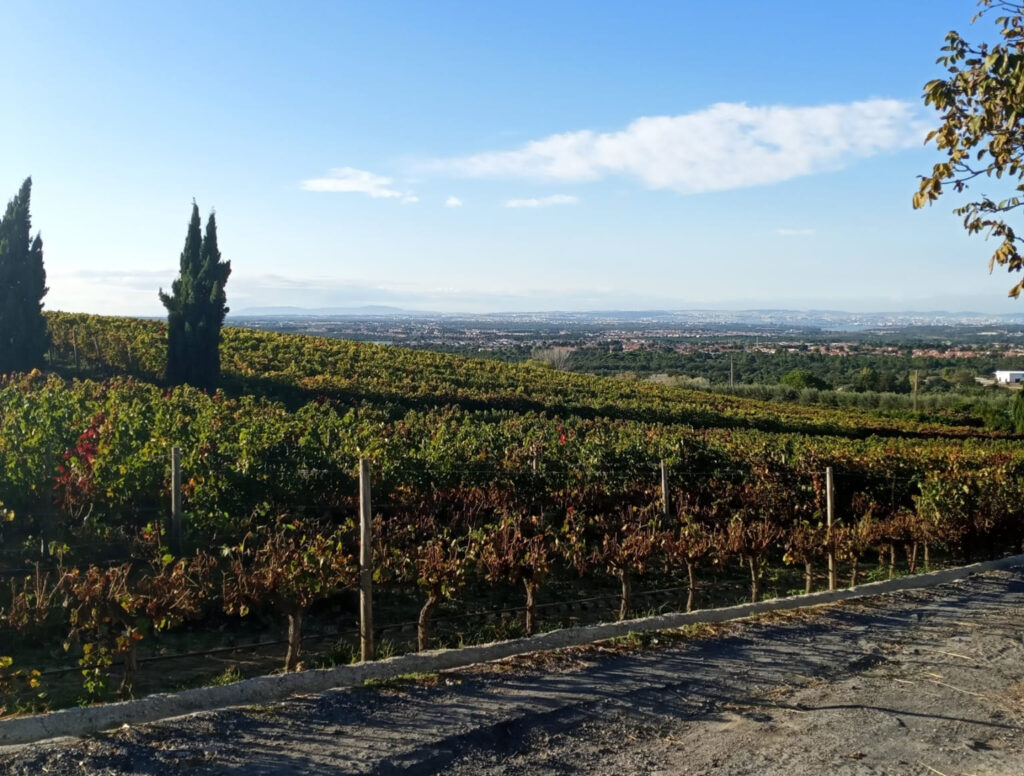
Setúbal is located in southern Portugal, around 30 minutes from Lisbon. The city is the homeland of the beautiful Sado river. Setúbal shares the area with other DOC’s like Palmela strong in the production of the Castelão variety.
The region is reputed as being one of the most antique wine producers and exporters. The wine region produces fortified wines. that have given popularity to this region. Namely, Setúbal is responsible for an almost exclusive Moscatel grapes production. Although the region has an equal amount of white and red wines, the red is mostly famous for its wine varieties that include Touriga Nacional, Casteloes, and Tintas. Setúbal wines mature in oak barrels for at least 5 years. This is why the regional wines gain an orange color and tastes intense, with an aroma of spices.
The most popular wineries of these regions are located in Setúbal city, Azeitão or even Comporta. And, we can highlight wineries such as Casa Ermelinda de Freitas, José Maria da Fonseca, Quinta da Bacalhôes, and António Saramago. Once again, it is not always about the big wineries. In this wine region, we can find a lot of small producers that have been reinventing themselves to stay up to the competition in a more niche market, for example, Adega do Camolas, Quinta da California, or Adega Pegões. Smaller producers are known as “Adega” which means Wine cellar.
Setúbal’s fun fact
Setúbal is one of the oldest wine regions in Portugal, which emerged even before the country was perfectly structured. The wine production and vineyard cultivation are estimated to have started in the valley of Sado’s river for about 2000 B.C. by the Tartessians population.
4 |
Dão
About Dão
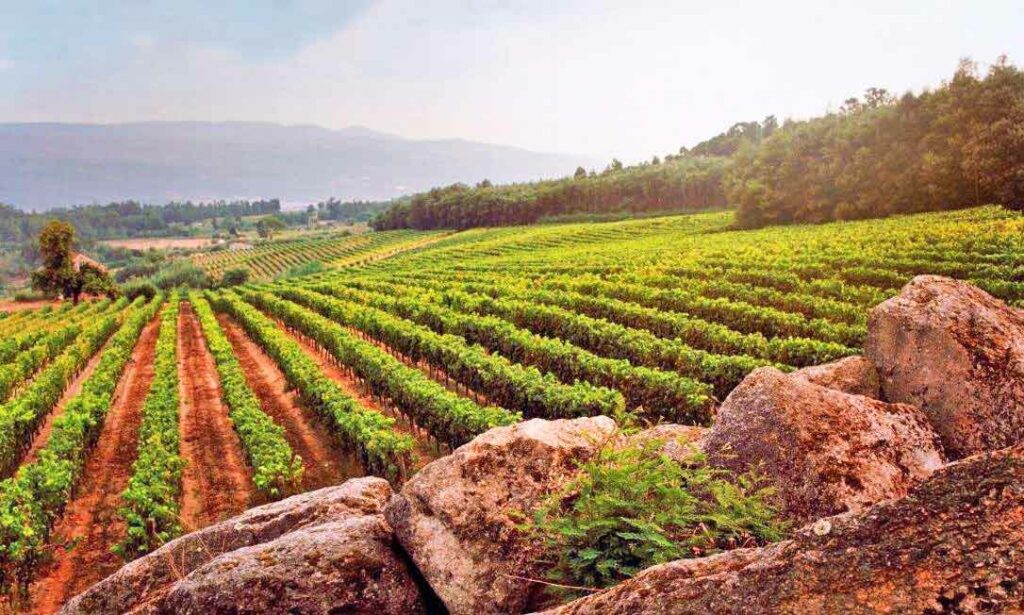
Dão may be one of the most underrated wine regions of Portugal. The wine region is located in the south of the well-known Douro. Dão is one of the oldest Portugal wine regions, such as Peninsula d Setúbal. It is in the Dão wine region that the popular Touriga National variety is produced and mostly used in the production of Port wine.
Dão official DOC recognition has been provided in early 1990. This wine region is one of the oldest of Portugal. However, it has pained until it has received official approval. It is located in the higher regions of Portugal, near three mountain ranges:
- Serra da Estrela
- Caramulo,
- Serra da Nave.
This region, also known as the Dão-Lafões region, produces wines with a very high acidity degree. Even if the region is quite small, it is still a critical place to go when visiting Portugal.
Dão‘s wineries and most popular wines
Simiarly to other Portugal wine regions, Dão produces both white and red wine with equal relevance to the region’s revenue.
Dão produces red wines that are quite deep and intense and full-bodied. The wines are really bold wines and I doubt that these types of wines can be found in another region on earth! The main wine grape varieties used to create these unique wines are Tinta Roriz and Touriga National. Touriga Nacional is a 100% regional wine variety. Even if in a low amount, the majority of Portuguese red wines include this variety.
Following, the white wines produced in this region are more traditional. A heavy and full-bodied with a fruited aroma, and fresh taste that stays in the mouth for a while. These modern white wines are based on the Encruzado grape variety. Other well-known grape varieties found in this wine region are: Touriga Nacional, Alfrocheiro, Aragonez, Jaen, Baga, Bastardo and Tinta Pinheira, Bical, Cercial, Malvasia Fina, Rabo de Ovelha and Verdelho.
Dão is the homeland of the notable Sogrape winery, known for its Mateus Rosé. It is also in Dão wine region that Quinta da Boavista and Quinta dos Roques are located.
Dão‘s fun fact
Dão wine region is one of the oldest wine regions in Portugal. Although it has been always popular, it was not always for the right reasons. Dão has long-time suffered from a bad reputation that only the international media and continuous improvement measures in the industry have helped. Today, Dão has wines that are top reputed in Europe and well-known in the whole world.
5 |
Top Portugal Wine Region: Lisboa
About Lisbon
Lisbon is the capital of Portugal. And, as the capital, it surely has its relevance in the winemaking Portuguese industry. The region produces wine in big quantities but keeps the production quite simple, according to regional producers. Lisbon wine region is located near Setúbal and Bairrada, and runs along the Tejo river, providing the capital with unique landscapes and views, and a climate clearly influenced by wind.
Lisbon counts with different sub-regions, where we can find different wine producers, vineyard landscapes, and wine tourism activities. These wine sub-regions are: Bucelas, Colares, Carcavelos, Torres Vedras, Alenquer, Óbidos, Arruda, and Lourinhã.
Wine-wise, Bucelas is by far the most relevant region of these all. Bucelas produces unique wines with the Arinto grape. Thus, resulting in a fresh and fruited wine, for a long summer night with friends.
Lisbon‘s wineries and most popular wines
Small cooperatives are responsible for producing the majority of Lisbon DOC wines. The region focuses its production on white, red, and rosé wines. The magical city is the home of a huge number of tourists each year, due to its large range of activities. Either you choose a modern or antique experience, Lisbon will always be the right fit. Regarding its wine, the momentum is pretty much the same: adapted to everyone’s tastes. Lisbon’s brand image wines are called “Vinho Verde”, which is a fresh and sparkling wine, that is appreciated by almost everyone.
With a low alcohol level, high freshness, and balanced acidity level, Lisbon wines are most appreciated as an aperitif. These wines must be drunk cold, and usually, without any food accompanying. The main grape varieties are: Galego Dourado, Castelão, Arinto, Ramisco, Touriga Nacional, Alicant Bouschet , and Tinta Roriz.
Since the region focuses on the production of wines that are adapted to everyone’s taste, it has a quite large range of wines. Lisbon wine region counts with 30 different types of grape varietals, both national and international variety. For instance, two international examples are Cabernet and Merlot.
The main Lisbon winemakers are Quinta do Gadril, Quinta do Sanguinhal, Adega Mãe, and Adega de Colares.
Lisbon‘s fn fact
Although denominated as Lisbon DOC, most Lisbon wineries are not located in the City of the Seven Hills. They are often located at 1h distance from the capital city of Portugal.